The best self-cleaning litter trays in the UK (2026)
Seven automatic litter trays compared on cat weight limits, litter type, waste capacity, running costs and apps. Plus an honest look at when a self-cleaning tray is a bad idea for your cat.
This guide contains affiliate links, each marked with a button. If you buy through one, we may earn a small commission at no extra cost to you. It never changes what we recommend, and we have not been paid to include any product. Prices were checked on 1 November 2026 and change often. As an Amazon Associate I earn from qualifying purchases.
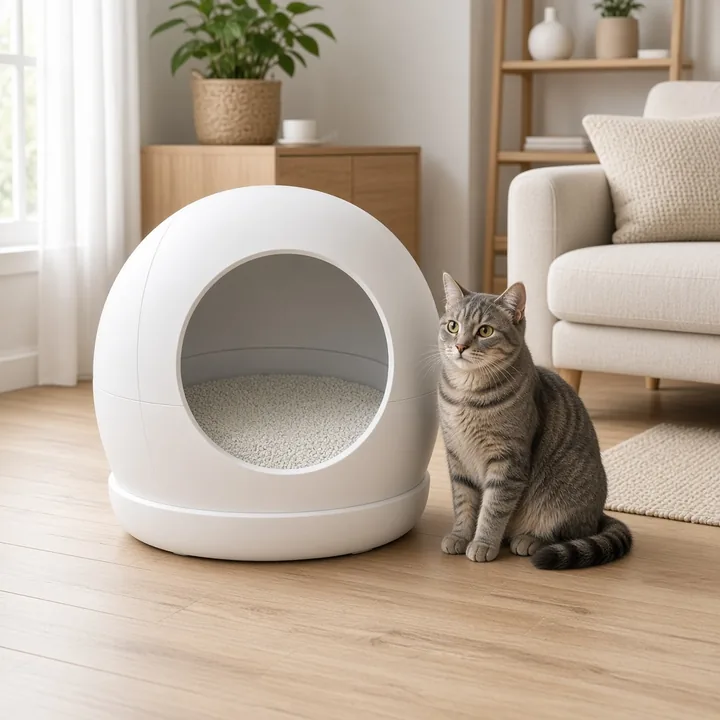
A self-cleaning litter tray senses when your cat has been in, waits, then sifts or rakes the clumps into a sealed bin. That can mean no daily scooping and a tray that stays fresher between visits, which matters because cats are less likely to use a tray that is already soiled.
They are not right for every cat, though. International Cat Care warns that self-cleaning trays "often make random movements or noises that can startle cats and disturb their toileting behaviour", and that many are quite small. The same charity recommends one tray per cat plus at least one extra, spread around the home. So even the best machine should sit alongside an ordinary tray, not replace every tray in the house.
There is a health catch too. When you scoop by hand, you see how much your cat is weeing. An automatic tray hides that. A cat straining in the tray, or making frequent trips that produce little or no urine, needs a vet urgently. PDSA says a blocked bladder is an emergency that can kill if left untreated, and male cats are most at risk. App visit logs can help you spot changes, but they are not a diagnosis.
Quick picks
- Best overall: Litter-Robot 4. The widest weight range here, a 40cm entry and a long track record.
- Best value enclosed tray: PETKIT Pura Max 2. 76 litres of space and 11 sensors for about £400.
- Best open-top: Neakasa M1 Plus Lite. No hood, for cats that feel trapped in enclosed trays.
- Best with a camera: Petlibro Luma. A camera and a large 44cm entrance.
- Best budget smart tray: PETKIT Purobot Crystal Duo. An open crystal tray with a camera for under £170.
- Best rake tray for ordinary litter: PetSafe ScoopFree Clumping. A low, open design that uses normal clumping litter.
- Simplest, no app: PetSafe ScoopFree Second Generation. A plug-in rake with disposable crystal trays.
Self-cleaning litter trays compared
| Tray | Design | Litter | Cat weight (maker) | Waste capacity (maker) | App | Price checked |
|---|---|---|---|---|---|---|
| Litter-Robot 4 | Rotating globe, enclosed | Clumping clay | 1.36–11.33kg | Drawer; "as low as" every 8 days | Yes | £699 Amazon · from £699 Litter-Robot UK |
| PETKIT Pura Max 2 | Rotating, enclosed | Clumping clay, tofu or mixed (no crystal) | 1.5–10kg* | 7L; up to 15 days for one cat | Yes (2.4GHz) | £399.99 Amazon · £398.89 PETKIT UK |
| Neakasa M1 Plus Lite | Open-top, rotating | Clumping | 1kg to about 15kg | 11.23L; up to 14 days | Yes | £299.99 Amazon |
| Petlibro Luma | Rotating, enclosed, camera | Clumping clay, tofu or mixed | 1–10kg | 11L; about 7 days for two cats | Yes + camera | £699.99 Petlibro UK |
| PETKIT Purobot Crystal Duo | Open-top, crystal tray, camera | PETKIT crystal trays only | Over 1.5kg | Disposable tray; up to 30 days for one cat | Yes + camera | £169.99 Amazon · £178.39 PETKIT UK |
| PetSafe ScoopFree Clumping | Open, rake | Clumping | Not stated | Covered bin; empty about weekly | No | £289.98 Amazon · £289.99 PetSafe GB |
| PetSafe ScoopFree 2nd Gen | Open, rake | ScoopFree crystal trays only | "Best for cats under 15 lb" (about 6.8kg) | Disposable tray; 20–30 days for one cat | No | £189.99 Amazon & PetSafe GB |
Specifications are the manufacturers' own, and we have not lab-tested them. Waste capacity claims depend on the number of cats, their diet and the litter, so treat them as best cases. *PETKIT UK gives 1.5–10kg, but the Amazon UK listing says "up to 18 lbs" (about 8.2kg).
The reviews
1. Litter-Robot 4 — best overall
Whisker's Litter-Robot 4 is a rotating globe. After your cat leaves, a timer runs, then the globe turns to sift clumps into a drawer in the base. You can stretch that delay to 30 minutes in the app. Whisker says it suits cats from 1.36kg to 11.33kg, and up to four cats. Kittens under 1.36kg should use it with the unit switched off as an ordinary tray. The entry is 40 × 40cm, but the footprint is big: 56 × 68.6cm, and about 75cm tall on the Amazon listing. Whisker recommends clumping clay litter. Crystal and white litters can confuse its sensors, and plant-based litters typically don't work.
The app logs visits and your cat's weight over seven days, which can help you spot a change. Whisker says the drawer needs emptying "as low as once every 8 days", and the carbon filter needs changing every two to four weeks. You get a two-year warranty. There is a 90-day home trial, but only if you buy direct from Whisker. The newer Litter-Robot 5 is also on sale at £899. We have not covered it here.
Pros: widest cat weight range here; large entry; step and fence included; weight tracking.
Cons: the most expensive option with the Luma; bulky; fussy about litter type; trial only applies to direct purchases.
Best for: households with up to four adult cats, including large ones, that have room for it.
Litter-Robot 4 (black) — £699.00 on Amazon UK when checked, sold by Whisker Europe. Litter-Robot UK listed it "as low as £699".
Check Amazon UK →2. PETKIT Pura Max 2 — best value enclosed tray
The Pura Max 2 is an enclosed rotating tray with a 76-litre interior, a 20cm entrance and 11 sensors. PETKIT claims it runs at 35dB. Its 7-litre bin lasts "up to 15 days for one cat", PETKIT says. It takes clumping clay, tofu or mixed litter up to 12mm, but not crystal. It measures 62 × 53.8 × 55.2cm and needs a hard, level floor. PETKIT UK gives a cat weight range of 1.5–10kg. Kittens under 1.5kg should not use automatic cleaning, and there is a Kitten Protection Mode. It connects over 2.4GHz Wi-Fi only, but PETKIT says it keeps working offline.
Running costs come from bags and deodoriser. PETKIT advises using its own waste bags, because thicker third-party bags may not fit, and sells them from £9.99 a roll. Its N50 odour eliminator cost £27.99 for three, with each lasting about 30 days.
Pros: roomy; good sensor coverage; works offline; much cheaper than the Litter-Robot.
Cons: no crystal litter; PETKIT-specific bags recommended; conflicting weight limits between listings.
Best for: one or two adult cats who already use clumping litter.
PETKIT Pura Max 2 — £399.99 on Amazon UK when checked, sold by PETKIT-UK. PETKIT UK listed it with an N50 deodoriser at £398.89.
Check Amazon UK →3. Neakasa M1 Plus Lite — best open-top
The Neakasa M1 has no hood. This is its big selling point for cats that will not use an enclosed tray. It rotates to sift waste into an 11.23-litre bin that Neakasa says lasts up to 14 days, with a 7.17-litre litter area. Neakasa claims no more than 50dB, and it uses six infrared sensors and four weight sensors. Neakasa gives a weight range of about 1kg to around 15kg, with a Kitten Mode for cats under 1kg. It uses clumping litter with grains no bigger than 3mm across and 10mm long. Expect 5–6kg of litter for the first fill. Any bin bag that fits will do. The Amazon listing gives 59 × 52.5 × 51.3cm and 10.5kg.
Pros: open design; large bin; wide weight range; no proprietary bags.
Cons: an open top means more litter scatter and less odour containment than an enclosed tray; warranty stated as one year on Amazon but two years on Neakasa's own site.
Best for: larger cats, or cats that avoid covered trays.
Neakasa M1 Plus Lite — £299.99 on Amazon UK when checked, sold by Neakasa Online. The M1 Plus (on Amazon UK with a mat and two rolls of bags) was £399.99 there, and Neakasa's UK site listed the M1 Plus at £359.99 in a sale.
Check Amazon UK →4. Petlibro Luma — best with a camera
The Luma is an enclosed rotating tray with a 44.2cm entrance and a built-in camera, and Petlibro claims 35–47dB. Its 11-litre drawer lasts about seven days for two cats, Petlibro says. It is for adult cats of 1–10kg. Use manual mode for kittens under six months or 1kg, and for pregnant or nursing cats. It takes clumping clay, tofu or mixed litter only, not crystal, pine or cassava. It must stand on a hard floor. It measures 59.2 × 57.3 × 71.4cm and connects over 2.4GHz or 5GHz Wi-Fi.
Live view is free, but recording and AI analysis need Petlibro's Video Cloud AI subscription. Petlibro says to replace the carbon deodoriser and mat about every three months. You get a 24-month warranty, and a 90-day return period if you buy direct.
Pros: very large entrance; camera; dual-band Wi-Fi; long return period direct.
Cons: expensive; the best camera features need a subscription; no crystal litter.
Best for: owners who want to see who is using the tray in a multi-cat home.
Petlibro Luma — £699.99 at Petlibro UK when checked. On Amazon UK we only found an imported listing with import charges, so we have not linked it. This is a plain link to Petlibro, not an affiliate link.
See it at Petlibro →5. PETKIT Purobot Crystal Duo — best budget smart tray
The Crystal Duo is a long, open tray that uses PETKIT's own disposable crystal litter trays. It clears waste automatically and has an AI camera. PETKIT says one tray lasts up to 30 days for one cat, and you dispose of the whole tray when it is spent. It measures 81.8 × 50.7 × 33.4cm, weighs 5.65kg and has an 18cm entrance, and PETKIT claims 40dB. It is for cats over 1.5kg. PETKIT says kittens under six months or under 1.5kg must not use it, though a Kitten Protection mode is available.
Running costs are the trays: a 4-pack refill set was £79.99 at PETKIT UK. Video history beyond the basics needs a PETKIT Care+ subscription.
Pros: cheapest smart tray here; open design; no scooping; camera.
Cons: only PETKIT crystal trays, a continuing cost; non-clumping crystals won't suit cats that prefer fine sand-like litter.
Best for: a single adult cat already happy on crystal litter.
PETKIT Purobot Crystal Duo — £169.99 on Amazon UK when checked, sold by PETKIT-UK. PETKIT UK listed it at £178.39.
Check Amazon UK →6. PetSafe ScoopFree Clumping — best rake tray for ordinary litter
This ScoopFree uses a detachable metal rake to drag clumps from ordinary clumping litter into a covered waste bin. PetSafe says you only need to empty it about once a week. It is a low, open, rectangular tray with high walls, about 72 × 52 × 25cm on the Amazon listing, and PetSafe sells a hood bundle separately. Bin liners are extra, at £10.99 from PetSafe GB. PetSafe does not state a cat weight range on its UK page. PetSafe's manuals for its other ScoopFree models say to leave the unit unplugged until a kitten is six months old, so we would do the same here. There is a two-year limited warranty. Amazon UK reviews were mixed when we checked, with complaints about noise and the rake sticking.
Pros: uses ordinary clumping litter; no app or subscription; open shape suits cats that dislike hoods.
Cons: mixed owner reviews; no app or visit tracking.
Best for: owners who want automation without proprietary litter or Wi-Fi.
PetSafe ScoopFree Clumping Self-Cleaning Litter Box — £289.98 on Amazon UK when checked, sold by Amazon. PetSafe GB listed it at £289.99.
Check Amazon UK →7. PetSafe ScoopFree Second Generation — simplest, no app
The original ScoopFree idea: a rake sweeps solid waste into a covered trap 20 minutes after your cat leaves, and crystal litter in a disposable tray absorbs urine. A health counter shows how often the tray has been used, and safety sensors reset the rake if your cat comes back. It only works with PetSafe's ScoopFree crystal trays. PetSafe's chart suggests one tray lasts 20–30 days for one cat, 10–15 days for two and 7–10 days for three or more. The manual says it is "best for cats under 15 lb", about 6.8kg. Kittens under six months should use it unplugged. A covered version was £219.99.
Pros: no Wi-Fi or subscription; health counter; low and open.
Cons: tray costs add up (3-pack £79.99); best for smaller cats; non-clumping crystals.
Best for: one smaller adult cat in a home that wants something simple.
PetSafe ScoopFree Self-Cleaning Litter Box, Second Generation — £189.99 on Amazon UK and at PetSafe GB when checked. Replacement crystal trays were £79.99 for three at both.
Check Amazon UK →How we chose
We have not tested these trays in our own homes. Instead, we compared each maker's published specifications, manuals and UK product pages with live Amazon UK listings on 1 November 2026. We only included trays that were in stock from a UK seller, or sold directly by the maker in the UK. We looked at:
- the cat weight and kitten limits stated by the maker;
- entrance size and whether the tray is open or enclosed;
- which litters it accepts;
- waste capacity;
- ongoing costs for bags, filters, trays and subscriptions;
- warranty and return terms.
We left out the CATLINK and PETKIT Pura X ranges because we could not find them reliably in stock in the UK when we checked. We also left out PetSafe's Simply Clean, which is no longer listed on PetSafe's UK store. Where two official sources disagreed, we have said so rather than picking one.
Is a self-cleaning litter tray right for your cat?
Some cats will refuse it
Movement and motor noise put some cats off, and a tray they avoid is worse than no upgrade at all. Introduce it slowly. Put it next to the old tray, filled with the litter your cat already uses, and leave automatic cleaning switched off for the first few days. Only remove the old tray once your cat is using the new one reliably. Keep at least one ordinary tray elsewhere in the house anyway. Our guide to litter tray problems covers what to do if your cat starts toileting elsewhere.
Kittens, small cats and big cats
Every maker sets a minimum weight, usually 1–1.5kg, and most say kittens should use the tray with cleaning switched off, or not at all, until they are older. At the other end, check the upper limit and the entrance size against your cat. International Cat Care suggests a tray should be about one and a half times your cat's length, and many self-cleaning trays are smaller than that inside.
Older cats and arthritis
High entrances and steps can be hard for stiff joints. International Cat Care says cats with arthritis or reduced mobility benefit from trays with lower sides. Open, low designs such as the ScoopFree models or the Crystal Duo may be easier than an enclosed globe. If your cat starts going next to the tray, see our guide to signs your cat is in pain.
Litter type
Each tray only works with the litter it was designed for. Rotating globes and the ScoopFree Clumping need clumping litter, and some reject crystals. The crystal models only take their own trays. Cats can be fussy about changes. International Cat Care says litter preferences form early in kittenhood and that many cats prefer a fine, sand-like clumping litter. Switch gradually by mixing the old litter with the new.
Noise, odour and placement
Quoted noise levels (35–50dB) are the makers' own figures. Put the tray somewhere quiet, away from food and water, as you would any tray. Bins, carbon filters and deodorisers reduce smell, but they still need emptying and replacing on schedule.
Running costs and apps
Budget for more than the machine. That means proprietary bags or liners, filters or deodorisers, disposable crystal trays and, on camera models, an optional subscription for recordings or AI features. App-connected trays can log visits and, on some models, weight. They are useful for spotting a change, but a log is no substitute for watching your cat. Some trays only connect to 2.4GHz Wi-Fi.
When to call the vet
- Your cat is straining in the tray, crying, or making frequent visits that produce little or no urine. Treat this as an emergency, especially in male cats.
- Blood in the urine, diarrhoea, or straining to pass faeces.
- A sudden change in how often your cat uses the tray, or toileting outside it.
Whatever you buy, keep scooping one ordinary tray by hand for the first few weeks. It lets you see normal output, and gives your cat a familiar back-up if the new machine spooks them. Fixing litter tray problems →
Common questions
Are self-cleaning litter trays safe for cats?
Most include sensors that pause cleaning while a cat is inside, but follow the maker's weight and age limits closely. Most say kittens should use the tray with cleaning switched off, and some cats are frightened by the movement or noise. International Cat Care advises caution with self-cleaning trays for this reason.
Can I use a self-cleaning tray for a kitten?
Usually not in automatic mode. Makers set minimum weights of around 1–1.5kg, and several say to use the tray switched off until a kitten is six months old. Check the manual for your model.
What litter do self-cleaning trays need?
It depends on the model. Rotating trays such as the Litter-Robot 4, PETKIT Pura Max 2, Neakasa M1 and Petlibro Luma need clumping litter. Crystal models such as the PetSafe ScoopFree Second Generation and PETKIT Purobot Crystal Duo only work with their own crystal trays.
How often do you empty a self-cleaning litter tray?
Makers quote anything from about a week to two weeks for one cat. Petlibro says about seven days for two cats for the Luma, and PETKIT up to 15 days for one cat for the Pura Max 2. More cats means emptying more often.
Do I still need more than one litter tray?
Yes. International Cat Care recommends one litter tray per cat plus at least one extra, placed in different parts of the home. A self-cleaning tray can be one of them.